Introduction
What worries you most when hosting a corporate event?
A lag in the run of show? A slip of the tongue? Or—the moment the lights hit and the screen lights up—the image just falls apart?
At a product launch, key details dissolve into a blurry halo. At an annual gala, the backdrop looks dull and lifeless. In a thousand-seat conference hall, those in the back rows are left squinting at vague outlines, guessing what's on display.
These seemingly trivial visual flaws are often the "silent killers" of an entire event—they don't interrupt the flow, but they quietly erode the experience and dilute the message the brand intends to deliver.
That's why a clear trend is accelerating: more and more companies are swapping out the projector at center stage for an LED display.
It's not about following a fad, nor showing off technology. It's an experience upgrade—from "visible" to "crystal clear," from "good enough" to "truly reliable." What LED brings isn't just a brighter image—it's a redefinition of control over the event experience: stable performance under complex lighting, full coverage across vast spaces, and zero compromise at every critical moment when the audience is watching.
This is precisely why it's becoming the indispensable "visual foundation" for modern corporate events.
 Reason 1: Stable Visual Quality Regardless of Lighting
Many events face this awkward moment: the stage lights come on, and the projected image instantly washes out. Rear-row attendees see only blurry outlines.
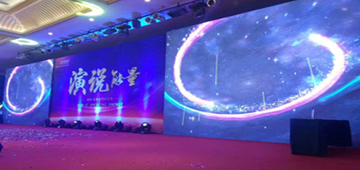
LED displays are self-illuminating, so they perform consistently under bright stage lighting and ambient light. Whether playing promotional videos, showcasing product details, or presenting data charts, the image stays crisp and vivid.
Projectors, in contrast, are highly sensitive to ambient light—excess light dulls the image, and details become unclear at a distance. Dimming the lights to accommodate projection often sacrifices the event's atmosphere.
For example, at a car launch, LED screens maintain clarity while lighting shifts dynamically with the music, ensuring product features shine through.
In short, LED displays offer more than just brightness—they provide reliable visual performance in complex environments, reducing the risk of "not being able to see clearly when it matters most."

Reason 2: Better Suited for Large Venues
One of the biggest challenges at large events is ensuring every attendee can see clearly. Front-row viewers are fine, but those in the back often struggle to make out the content—hurting the experience at press conferences, summits, or exhibitions.
LED displays use modular panels that can be customized to any size—from a small backdrop to a massive stage-wide screen—fitting venues of all scales.
Projectors have fixed screen sizes and struggle to maintain consistent viewing quality across large spaces. LED displays ensure clear images, text, and video whether the audience is near the stage or far away.
At an international brand launch with media, partners, and a large crowd, an LED wall not only plays promotional content but also switches seamlessly between presentations, data charts, and brand visuals—keeping the flow smooth.
Moreover, LED screens can be curved, shaped irregularly, or combined into multi-screen setups, freeing stage design from traditional rectangular constraints. For large-scale events, LED displays are more than "bigger images"—they ensure every key moment is visible to everyone.

Reason 3: Enhanced Visual Experience
Atmosphere matters. Why do some press conferences leave lasting impressions? Why do some concerts and brand events go viral with photos and shares? Often, the answer lies in the visual design.
LED displays transform the stage backdrop from a static image into a dynamic space—showing brand videos, high-resolution product details, and animated data visuals in sync with the event flow. The audience experiences the product, not just hears about it.
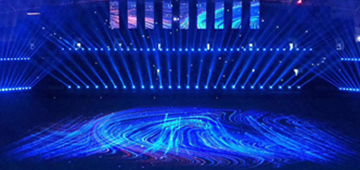
In large events, LED screens integrate with lighting, music, and stage design to create immersive environments. An ordinary stage can instantly shift from a futuristic tech space to a brand storytelling scene.
Leading brands now treat LED display systems as core stage design elements, not just backdrops. Through creative visuals, real-time interaction, and striking effects, LED screens help brands convey their message more powerfully and make the experience more memorable.
The goal isn't complexity for its own sake—it's visuals that serve the event's theme. Great design leaves the audience "impressed" and ensures they remember what the brand wants to say.

Reason 4: Flexibility to Handle Changing Needs
Anyone who runs events knows that on-site plans rarely go exactly as expected. Venue sizes change, stage designs are adjusted, and program flows get updated—a display solution must adapt quickly.
LED displays are composed of modular panels that can be freely assembled to fit any space. Small meetings use simple backdrops; large conferences combine into massive visual walls; curved or custom shapes integrate seamlessly into stage designs.
This flexibility is especially valuable for roadshows—where venues differ across cities. Redesigning display equipment each time is costly and time-consuming. LED displays can be resized and rearranged on-site, making them ideal for mobile events.
Content switching is also effortless. In one event, you might go from a brand video to a speaker's presentation to live data and interactive segments—all in seconds. LED displays keep up with the pace without breaking the rhythm.
For organizers, the value of LED displays goes beyond "enlarging the image"—they are agile tools that adapt to change and bring creative ideas to life.

Reason 5: Stronger Brand Presentation
After an event, attendees may forget specific talking points, but a striking visual often stays with them. That's why more brands use LED displays at launches, exhibitions, and corporate events—turning the occasion into a true brand experience, not just "someone speaking with slides."
LED screens showcase logos, brand stories, promotional videos, and product details in a dynamic, attention-grabbing format. At a product launch, for example, the screen can walk through design processes, use cases, or functional demos—helping audiences quickly grasp key highlights without lengthy explanations. For complex tech products, a clear video often speaks louder than pages of text.
Meanwhile, a high-definition, well-designed screen makes the stage look more professional, projecting brand strength to clients, partners, and media. Visual impact is often the audience's first impression of a company's caliber.
More importantly, compelling visuals make brands more memorable. After the event, people may forget a specific introduction—but an iconic stage image or captivating brand video becomes that lasting impression.
For businesses, LED displays are not just backdrops—they are essential tools for brand expression and reinforcement, ensuring the message is seen and remembered.

Conclusion
Choosing LED displays for corporate events is not just about swapping equipment. Sharper images, greater flexibility, and stronger on-stage presence have made them an increasingly vital part of event planning.
A meticulously prepared event shouldn't be undermined by a subpar screen.
For more information about LED displays, please contact us.