Introduction
An ordinary screen is hard to remember. A circular LED screen is different—it can be suspended above a stage, appear in a shopping mall atrium, or become a visual installation in an exhibition hall. The screen itself has visual appeal, and combined with dynamic content, it easily becomes the “star” of the space.
 Advantage 1: 360° Surround Display, Expanding Content Viewing Range
Ordinary LED screens have a “directional” feel—best viewed from the front, diminishing from the side. But people in shopping malls, exhibition halls, and airports won’t stand directly in front of the screen.
A 360° surround LED screen allows content to unfold around the entire structure, visible from different directions—particularly suitable for open spaces such as shopping mall atriums, exhibition hall centers, hotel lobbies, and transportation hubs. Brands don’t need to worry about “which side is the main screen,” because it essentially has no “back side.”
In high-traffic areas, this multi-directional display expands content coverage—the same advertisement doesn’t need a larger flat screen; the wraparound structure lets more eyes naturally reach the content. The content itself becomes part of the space, such as flowing light effects, brand animations, or city visuals that continuously unfold around the screen, creating a more complete visual experience than a single wall.
Core value: Transforming the screen from a visual plane into a three-dimensional content carrier.
 Advantage 2: Unique Design, Creating a Visual Focal Point
A regular square LED screen is stable, but the problem is obvious—everyone has seen it, and it’s easy to forget. A circular LED screen has presence simply because of its shape, breaking the flatness of traditional rectangular screens and transforming the screen from a “device mounted on the wall” into a visual installation within the space.
In open spaces like shopping mall atriums, showrooms, and hotel lobbies, a suspended or wraparound LED screen easily becomes a focal point. Customers may notice the “glowing ring” even before they see the content. The ring shape itself is easily remembered, and when brand logos, dynamic content, and lighting effects combine with the circular structure, the screen can even become a visual landmark of the venue.
Core value: Transforming the space from “There’s an LED screen here” to “There’s a very special visual center here.”
 Advantage 3: Stage and Event Applications, Enhancing the On-Site Atmosphere
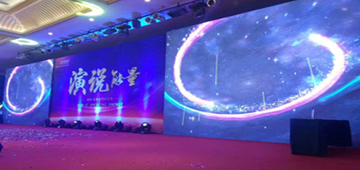
Using LED screens on stage merely as a “backdrop” wastes their potential. At concerts, galas, and press conferences, audiences are not just watching the performance but experiencing the lighting, music, and overall mood of the space.
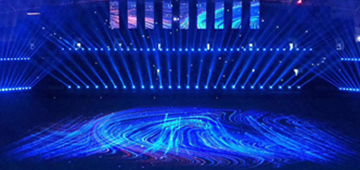
A circular LED screen can be placed above the stage, around it, or even as part of the stage’s visual structure. Combined with lighting and music, the image continuously rotates and changes, extending the stage’s visual effect from a single plane to the entire space. At a concert’s start, the circular screen can play rotating light effects that change with the music’s rhythm; at a brand launch, new product images and promotional content unfold along the circular structure—before the host even says “Welcome everyone,” the visuals have already created an atmosphere.
For large events, a circular LED screen doesn’t fix the audience’s gaze in one direction. Audiences in different areas can see parts of the image, making the stage feel more cohesive. With lighting, sound, and dynamic content, the entire stage is no longer just “screen + program” but a constantly changing digital scene.
Core value: Helping the event establish a stronger visual rhythm and a more immersive experience.
 Advantage 4: Commercial Advertising Applications, Increasing Brand Exposure Opportunities
Ordinary flat advertisements can only wait for customers to walk right in front of them, but a circular LED screen lets the advertisement face more than one direction. It is particularly suitable for high-traffic spaces such as mall atriums, commercial complexes, and brand experience zones, displaying brand advertisements from multiple directions and giving customers on different paths a chance to see the content.
The same advertising space doesn’t need to be rebuilt; simply changing the content gives it a “new identity”: brand advertisements and new product promotions on ordinary days, holiday-themed animations at Christmas, and promotional information during sales. Dynamic content also creates visual variation more easily than static posters—a car brand can have its vehicles “circle” around the screen, while a fashion brand can have its new product visuals continuously appear in a circular pattern.
For business operators, a circular LED screen can handle more content: brand advertising, event promotion, holiday marketing, and business collaborations can all be flexibly adjusted according to time and needs.
Core value: Through multi-directional display + dynamic content + flexible updates, limited space gains more exposure opportunities.
 Advantage 5: Information and Digital Content Display, Improving Space Utilization
Circular structures and central hanging areas in airports, train stations, and exhibition halls may just be “occupying space” most of the time. If it’s already there, why not make it work too?
Circular LED screens can transform previously underutilized spaces into digital content carriers, displaying navigation information, event announcements, real-time updates, and venue introductions. In high-traffic areas like airports and train stations, multi-directional displays ensure information is visible to people on different routes. When there’s no important information, it can switch to digital art, cityscapes, brand visuals, or interactive content, allowing the circular screen to serve simultaneously as an information display and a space atmosphere creator.
For instance, a technology exhibition hall can use it to display real-time data and exhibition information during the day, and switch to digital art effects like starry skies and particles at night—by day it resembles an information center; by night, a luminous art installation.
Core value: Revitalizing previously idle or difficult-to-use three-dimensional spaces.
 Conclusion
The truly interesting thing about a circular LED display is that it does two things simultaneously: display and design. When a screen begins to participate in spatial design, it brings more than just information display; it creates a visual focal point that is easier to see and remember.